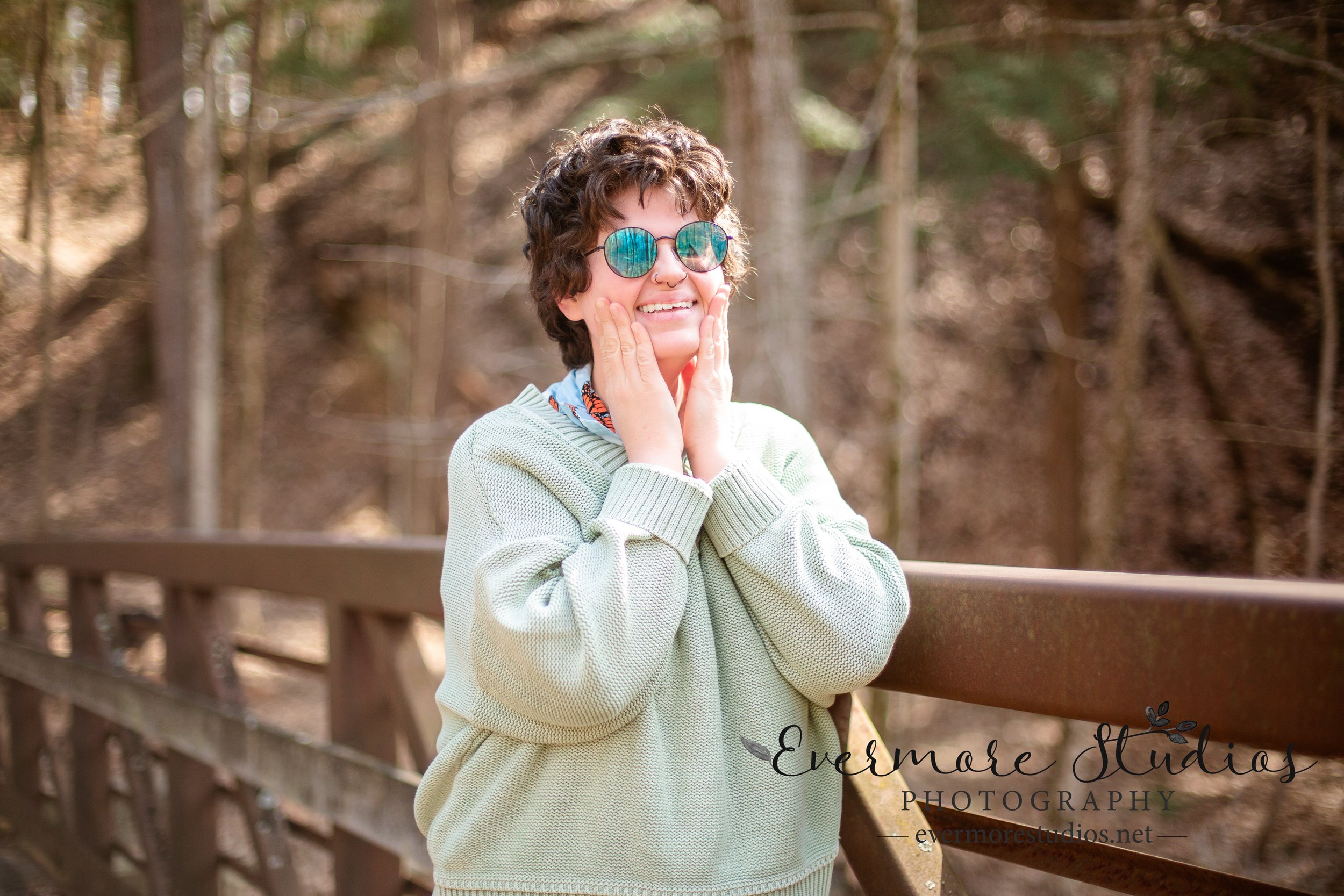
I’m Phia, and I have AuHDHD. I worked hard for my autism diagnosis. I went through my whole life feeling like the weird outsider kid that never fully fit in with my peers. I noticed there were things I was behind on socially like makeup, clothes, and what popular fad everyone was on. I also noticed I struggled more with making friends. I’d always been good at talking to people (I love to talk, and have learned it’s one of my favorite stims), but it didn’t go much past that. I felt like I was just there to entertain, that they were waiting for me to say or do something weird to make them laugh. It wasn’t until high school that I formed my own group of neurodivergent friends and joined my high school Gay Straight Alliance that I felt wanted and accepted. I finally had other peers similar to me that I could relate to and not fear losing due to my “weirdness.”
I didn’t get diagnosed with autism until I was 21, after years of trying to get a diagnosis. Before getting my diagnosis, I’d been questioning since high school if I had it or not, but it always got brushed off. I talked to therapists, trusted adults in my life, friends, and my family about potentially being autistic. Unfortunately, it always got brushed off as depression or anxiety, then later ADHD when I got diagnosed at 17, which was also a struggle cause even though the test I took said I had it he didn’t believe it. It wasn’t until the pandemic, when I was going through burnout from working 40-plus hours a week and having bad mental health, that no matter how I treated it, it wouldn’t get better. So I worked for my autism diagnosis. I went through BRAINS because they specialized in neurodivergent care, and since I had an ADHD diagnosis, I felt like I had a better chance at being listened to and considered for autism. When I got my diagnosis, one of the first things the therapist said was “I can’t believe you haven’t been diagnosed before now,” and I broke down crying. Here, I had been struggling my whole life just to fit in and keep up with my peers, wondering why I never could.
I finally had my answer, and a HUGE weight was lifted off my shoulders, but I was also filled with a lot of grief. Why did it take so long to get a diagnosis, and what would my life look like if I was diagnosed younger with questions I was constantly thinking about after my diagnosis. While I can’t go back in time and get a diagnosis sooner, I have worked extremely hard to surround myself with supportive friends, found a job that accepts and accommodates me, and have been gentler and kinder to myself. My diagnosis helped me to fully accept myself. Before, I would constantly blame and berate myself for not being on par with my peers and struggling so much while others were breezing through. Now I accept that there are things that I can’t do or am really going to struggle with, and it’s ok. I’m in a world that’s not built to help me, but I’ve created my own community where we accept everyone and don’t judge each other.
Since getting my diagnosis, I have blossomed. I’ve learned that it took so long to get a diagnosis because I masked so much, and since getting it, I’ve worked hard on not masking and letting myself feel my emotions and sensory issues. I view my autism as a double-edged sword; there are good and bad parts. I have major sensory issues. I can only wear certain clothes; I always have to wear sunglasses and earbuds everywhere I go, I can’t handle big crowds and overstimulating environments, some of my actions and the things I say get misread; and I don’t always fit in and get along with others. I’ve learned that it’s ok because there are also good things that come with it. I have a deep care for everyone and everything that I do. I’m an excellent listener and always stand by my friends. I have a lot of empathy and can easily see where others are coming from. I have a bunch of fun facts that others don’t know about, and it’s made me a great advocate for other autistic folks.
Getting my diagnosis allowed me to finally be my true self and to not care about what others think of me. I am always going to be this way. I’m always going be loud, sensitive, weird, caring, and stimming. And it’s ok because it’s me. I’m never going to fully fit in society, and there’s nothing wrong with that. I now surround myself with friends who accept me for me, who aren’t afraid of being embarrassed by me, and who will always be accommodating. My diagnosis has helped me do the same for others because I don’t want other folks to feel the way I did. I will always accept and be accommodating of others because we all struggle; it just looks different. It’s allowed me to make genuine connections with others and educate them that autism doesn’t look the same. We’re all different, and that’s what makes life interesting.